FDA rewrites drug safety rules to allow human-cell testing over animal experiments
09/23/2026 / By Cassie B.
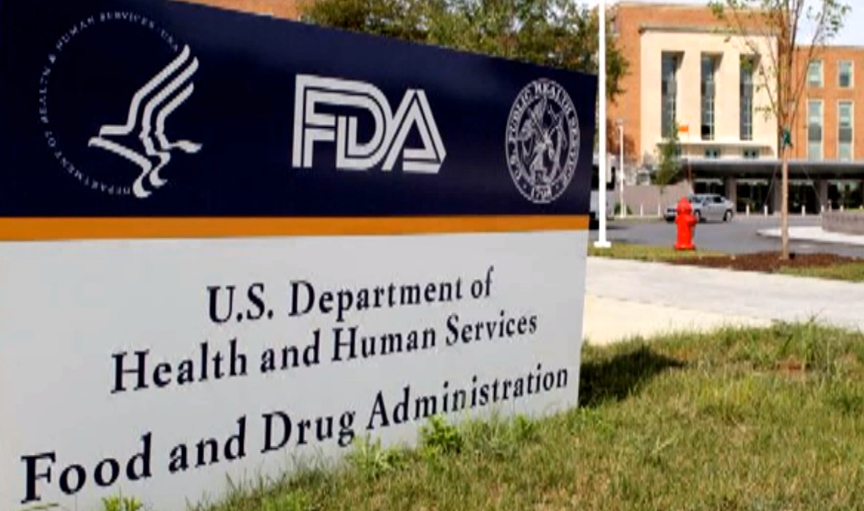
- The FDA has issued a new rule letting drug makers use human-cell tests, organ chips and computer models instead of animal studies before human trials.
- The change replaces decades-old language that treated animal testing as the only accepted safety standard.
- Companies can still use animal studies when appropriate, and safety reporting requirements remain unchanged.
- The rule follows a broader Trump administration push, with NIH also funding $88 million for non-animal research methods.
- Studies suggest about 90% of drugs proven safe in animals still fail once tested in humans, fueling the shift.
The U.S. Food and Drug Administration issued a direct final rule on Sept. 21 that formally allows drug and biologic developers to rely on human-cell assays, organ-on-a-chip technology and computer modeling instead of animal studies when demonstrating that a new medicine is safe enough for its first human trial. Acting FDA Commissioner Kyle Diamantas announced the change, which publishes in the Federal Register on Sept. 22 and takes effect Feb. 4, 2027, unless public comments derail it.
The update implements the Food and Drug Omnibus Reform Act of 2022, replacing decades-old regulatory language that had effectively treated animal testing as the only recognized standard.
What the rule actually changes in federal regulations
The rule swaps phrases such as “animal tests” and “animal studies” for the broader terms “nonclinical tests” and “nonclinical studies,” a category that now formally covers cell-based assays, organ chips, bioprinted human tissue and computer modeling alongside traditional animal experiments. Federal safety provisions that previously pointed to animal data now simply require “nonclinical” evidence.
The FDA says the underlying evidence bar hasn’t moved: Sponsors must still show a drug is reasonably safe before the first human dose, and any nonclinical finding suggesting a significant risk to people must still be reported within 15 calendar days, regardless of which method produced it. The agency also opened a database cataloging 25 initial examples of these “New Approach Methodologies,” drawn from its own review files.
Why animal testing stays on the table for some drugs
“Our goal is not to replace one rigid approach with another,” Diamantas said. “It is to support rigorous, modern science — including animal studies when they remain appropriate and validated alternatives when they can provide the evidence needed to protect patients.”
The FDA acknowledged in the rule that animal studies may still be necessary for drugs aimed at entirely new biological targets, where hormone, immune and cross-organ interactions are hard to replicate outside a living system. The agency also said it expects no new costs from the change, since it already allowed non-animal data where appropriate, and it isn’t projecting how much the shift will actually help; validation is still decided case by case.
Public comment window closes in December
The public has until Dec. 7 to weigh in through regulations.gov, under docket FDA-2026-N-5347. If the FDA gets no significant objections, the rule takes effect automatically on Feb. 4, 2027; significant opposition would force the agency to pull it and start over under standard notice-and-comment rules. The move builds on an April 2025 FDA roadmap that began phasing out animal testing for monoclonal antibody drugs. Britain has separately committed roughly $27 million toward lab-grown human tissue research, including a Cambridge hub, MedicalDaily has reported.
Bigger push against animal testing gains momentum
The rule is part of a broader campaign inside the Trump administration’s Department of Health and Human Services. The NIH separately announced $88 million for research infrastructure built around these same non-animal methods, and HHS Secretary Robert F. Kennedy Jr. framed the effort as putting “human biology at the center of science.”
That framing should resonate with anyone who has watched animal data wave drugs through to market only to see them pulled later over side effects regulators didn’t catch: studies suggest roughly 90% of drugs deemed safe in animal testing still fail once tried in humans. In theory, human-cell and computational methods could close that gap. But the rule is voluntary, not mandatory, and it was industry — not patients — pushing hardest for the flexibility to pick whichever test is cheapest and fastest. Whether that flexibility leads to fuller, faster safety disclosures or simply lets companies bypass warning signs animal studies still catch isn’t something regulators have answered, and it’s not something a short comment period will settle, either.
Sources for this article include:
EuropeanPharmaceuticalReview.com
Submit a correction >>
Tagged Under:
Animal testing, big government, corruption, Drug Testing, FDA, human cells, insanity, medical experiments, pharmaceutical drugs, research, science deception, science fraud
This article may contain statements that reflect the opinion of the author
RECENT NEWS & ARTICLES