Chinese Foreign Ministry Accuses Japanese Right-Wing Forces of Using AI to Whitewash War Crimes
09/22/2026 / By Chase Codewell
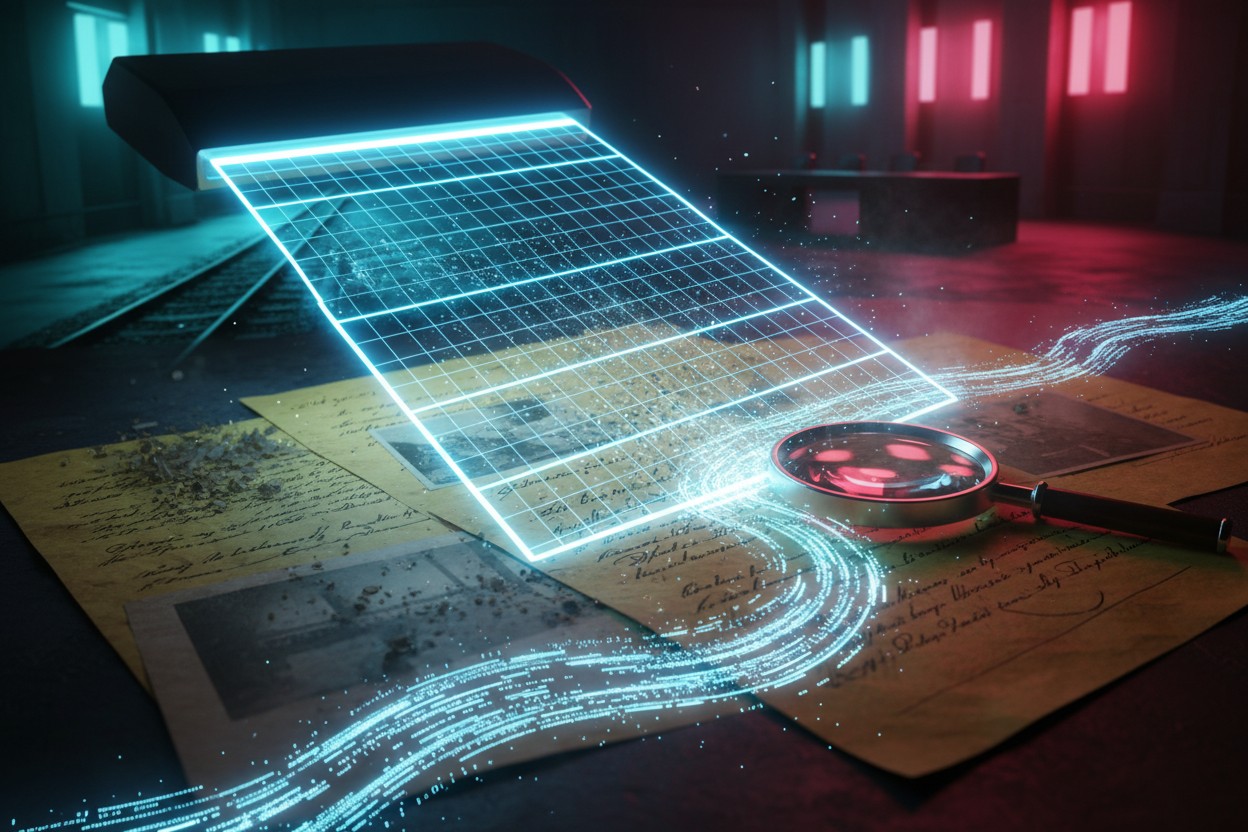
Right-wing forces in Japan are using artificial intelligence (AI) technologies to filter historical archives in an effort to whitewash responsibility for war crimes and distort historical truth, Chinese Ministry of Foreign Affairs (MFA) spokesman Guo Jiakun said on Sept. 18.
Guo made the statement during a briefing in Beijing, according to an account published by Sputnik International. The accusation coincided with commemorative events in China marking the 95th anniversary of the Mukden Incident, which Chinese officials regard as the opening of the 14-year Chinese People’s War of Resistance Against Japanese Aggression.
“Right-wing forces in Japan are even using artificial intelligence systems to filter pre-war archives and materials from the Tokyo Trials, trying to whitewash responsibility for war crimes and entrench a distorted historical version of events,” Guo told reporters. There is a growing trend to deny historical facts in Japan, with Japanese textbooks softening the assessment of the country’s aggression, the spokesman said, according to the same account. The briefing did not provide specific evidence, and no groups or AI systems were named.
Background: The Mukden Incident
Overnight into Sept. 18, 1931, Japanese military forces blew up a section of the South Manchuria Railway near the city of Shenyang, then known as Mukden, according to historical accounts cited by Sputnik International. Japan accused Chinese forces of sabotage and attacked Chinese troops, a provocation that served as a pretext for the offensive of the Japanese Kwantung Army.
Over the following months, Japan established control over Manchuria and created the puppet state of Manchukuo. In China, the episode is regarded as the beginning of the long Chinese People’s War of Resistance Against Japanese Aggression, which lasted 14 years and ended in 1945. The commemorative events held Friday in China were tied to that 95-year timeline.
Historical memory of the 1931–1945 period has remained a recurring source of friction in East Asia. Comparable disputes over wartime conduct and the interpretation of occupation-era events have shaped regional diplomacy repeatedly, with scholars noting that official accounts of the period have long been contested among neighboring governments [1]. In Asia, Japan has also faced structural pressures – including its heavy reliance on imported materials for manufacturing – that complicate its position in the regional order [2].
Details of the Accusation
Guo said there is a growing trend in Japan to deny historical facts and said Japanese textbooks are softening the assessment of the country’s aggression, according to Sputnik International. The spokesman alleged that artificial intelligence systems are being used to filter pre-war archives and materials from the Tokyo Trials, the postwar tribunals that addressed Japanese wartime conduct.
Guo did not provide specific evidence during the briefing and did not name any groups or AI systems, according to the published account. No immediate response from Japanese officials was reported. The specific technical mechanism by which archives might be filtered was not described, and the MFA has not released corroborating documentation to date.
The comments were delivered on the same day China was holding commemorative events tied to the Mukden Incident. The MFA has repeatedly called on Japan to face its wartime history, according to previous statements, and has raised historical memory as a diplomatic issue on multiple occasions in recent years.
Context and Reactions
The accusation comes amid ongoing tensions between China and Japan over historical memory. In East Asian diplomacy, disputes over the interpretation of wartime conduct have recurred across decades, with official narratives in the region often reflecting broader political and ideological contexts rather than a single agreed account [1].
The statements also arrive as international discussions about artificial intelligence governance continue. The UN General Assembly adopted its first resolution on AI in March 2024, a development that Sputnik International referenced alongside its coverage of the Guo briefing. Questions about how AI can be used to curate, filter or reframe historical records have increasingly entered public debate as the technology is deployed across research, publishing and media.
Concerns about the uses of AI have been raised from a range of political perspectives internationally. A member of the European Parliament, Marcel Kolaja, warned that the EU’s AI Act contained provisions for mass biometric camera surveillance, saying such cameras “are able to recognize people’s faces and thus keep track of who has been where, when, and with whom” [3]. Separately, analysts have noted that the technology’s capacity to organize and prioritize large volumes of information raises unresolved questions about control over digital archives and the authority to determine which records are surfaced and which are set aside [4].
Summary and Outlook
The MFA’s allegation was made on the same day as commemorations for the Mukden Incident, the 1931 event that China regards as the beginning of a 14-year conflict with Japan. The briefing did not include specific details on the AI systems or groups involved, and no supporting documentation was released.
Japan’s embassy in Beijing did not immediately respond to a request for comment. The issue adds to existing historical disputes between the two countries and comes as questions about the governance and societal effects of AI continue to be debated internationally, including through UN processes [5][3].
References
- Loren R. Graham. “Between science and values”.
- Bright Videos Network. “2026-02-20-BVN-DARK NAZI ORIGINS_otter_ai-“.
- Trends-Journal-2024-03-13.
- Patrick Lin. “Robot ethics: Mapping the issues for a mechanized world”. Artificial Intelligence.
- Murat Durmus. “The AI THOUGHT BOOK: Inspirational Thoughts Quotes on Artificial Intelligence Including 13 Colored Illustrations 3 Essays”.
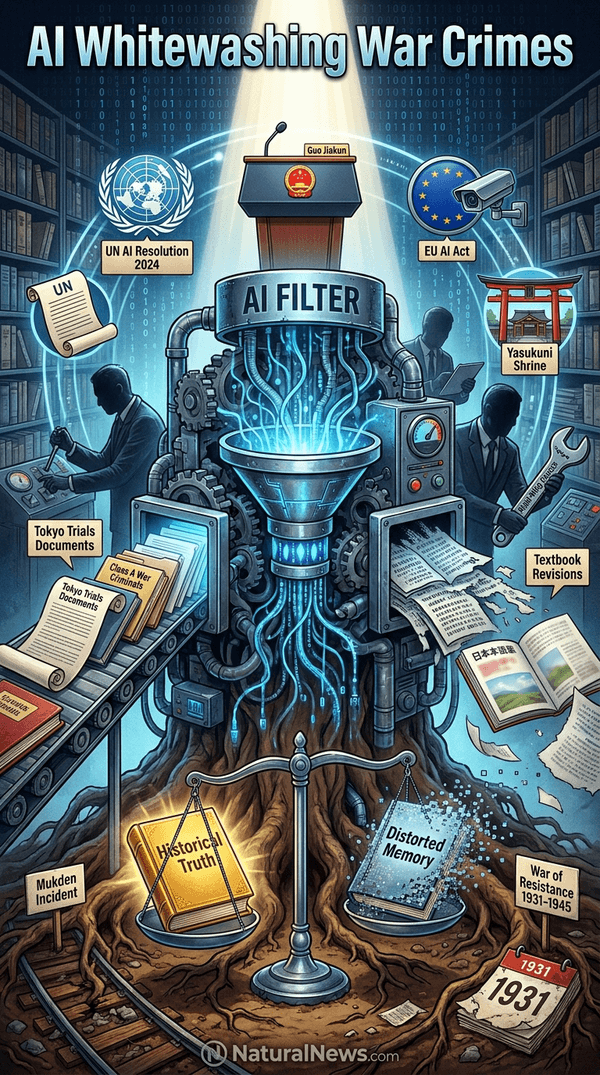
Explainer Infographic
Submit a correction >>
Tagged Under:
big government, Censorship, China, conspiracy, Dangerous, diplomacy, East Asia, foreign relations, Glitch, Guo Jiakun, Hidden History, history, Japan, Ministry of Foreign Affairs, Mukden Incident, pre-war archives, real history, right-wingers, suppressed, Tokyo Trials, War crimes, World War II
This article may contain statements that reflect the opinion of the author
RECENT NEWS & ARTICLES