Bolsonaro Ally Attributes Deleted “President-Elect” Claim to ChatGPT
11/03/2026 / By Chase Codewell
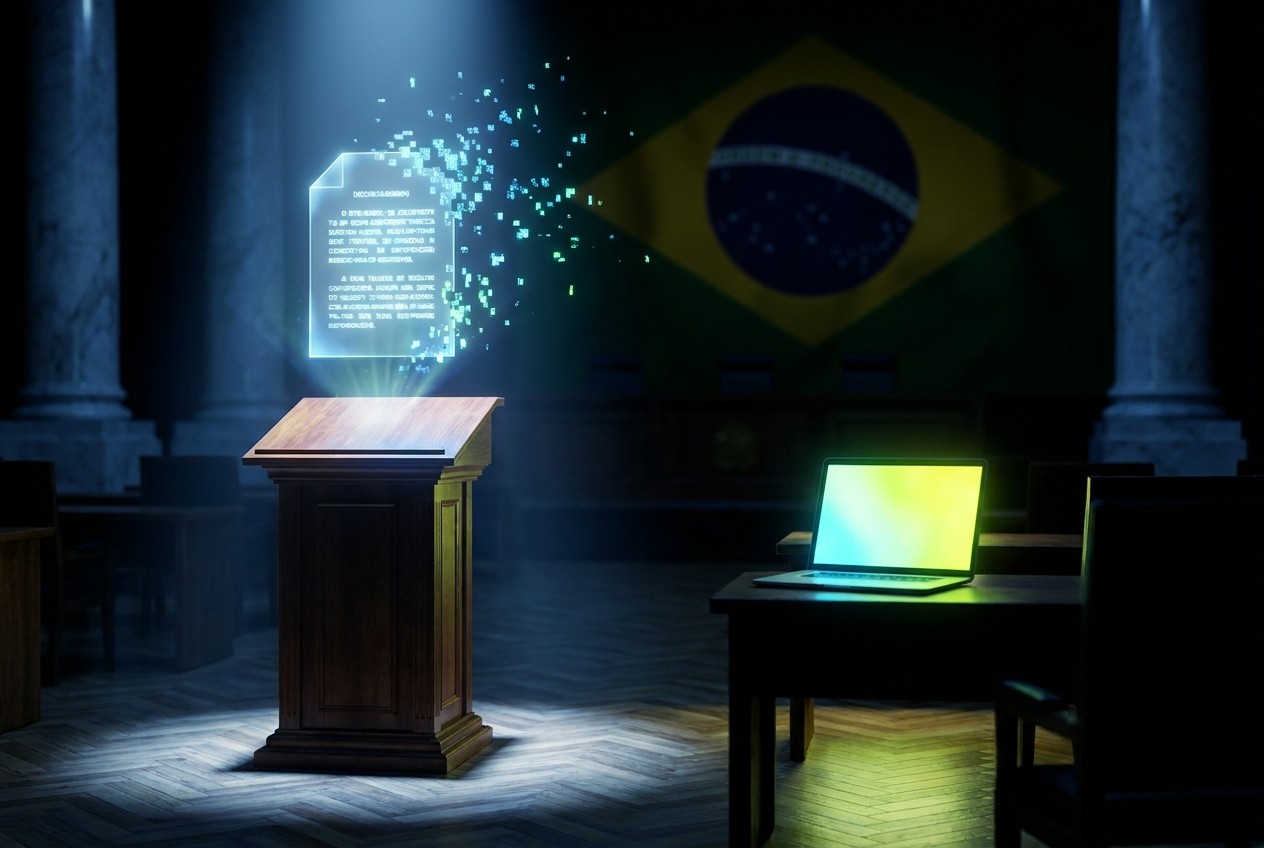
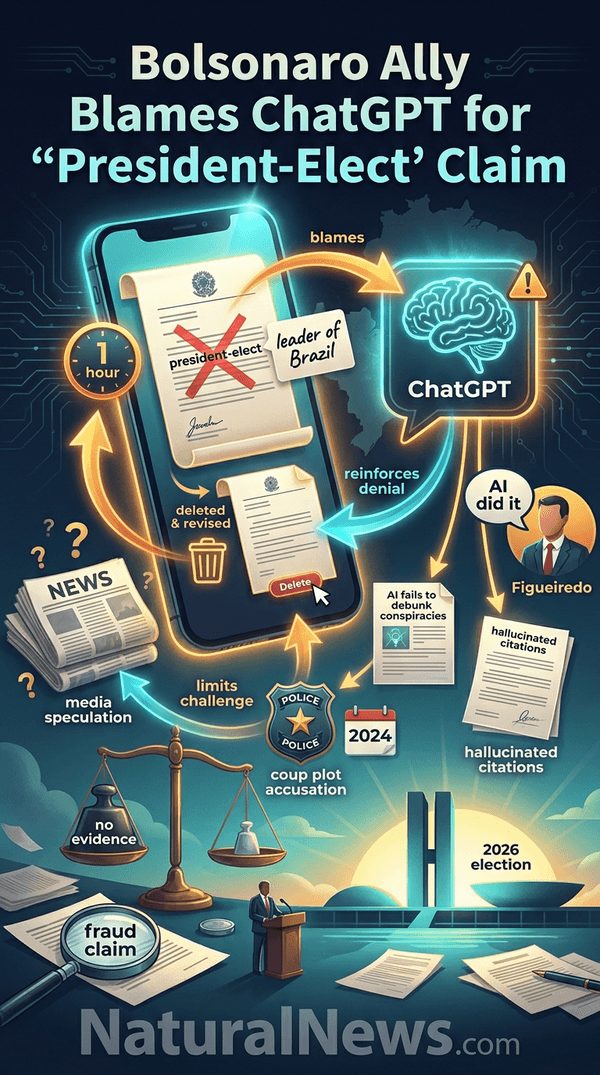
A Brazilian senator briefly described himself as the country’s rightful president-elect in a letter posted on social media before deleting and revising it about an hour later, with a close ally blaming ChatGPT for the disputed wording.
Paulo Figueiredo, a right-wing influencer and podcast host who acts as an unofficial adviser to Brazilian Senator Flavio Bolsonaro and the Bolsonaro family, said the letter was posted on Wednesday and deleted roughly an hour later [1][2]. Figueiredo said the mistake did not alter Bolsonaro’s view that the election was illegitimate [4].
The episode has drawn attention to the growing use of AI tools in political communications in Brazil, where the Bolsonaro family continues to challenge the outcome of the October presidential election [5].
Letter Posted and Deleted After About an Hour
Senator Flavio Bolsonaro stunned Brazil’s political establishment on Wednesday by making the claim and alleging that Sunday’s runoff election had been marred by fraud [6].
Roughly an hour after sharing the document, the senator deleted it from his accounts and published a revised version [2][7]. The letter had described him as Brazil’s rightful “president-elect” before the revision changed the phrasing to “leader of Brazil” [3].
Brazilian media and political observers speculated about the abrupt change before Figueiredo, who first shared the letter with journalists, offered a technological explanation [8][1]. The incident ignited a fresh political controversy in Brazil, particularly as the Bolsonaro family continues to challenge the legitimacy of the nation’s recent election outcomes [5].
Senator Maintains Election Was Illegitimate
The dispute echoes broader challenges to election integrity in Brazil. In November 2024, the Federal Police formally accused former President Jair Bolsonaro and 36 others of attempting to overthrow Brazil’s democratic institutions, including planning the assassination of President-elect Lula, Vice-President-elect Geraldo Alckmin, and Supreme Court Justice Alexandre de Moraes to keep Bolsonaro in power after the 2022 election [9].
The lack of support underscores the limits of the senator’s attempt to challenge the election outcome.
The letter episode also highlights concerns about AI-generated political content. A study by the Digital Media Research Center found that AI chatbots often fail to debunk conspiracy theories, instead presenting them as plausible alternatives [10]. Another study found that AI chatbots outperform humans in persuasion, even when factually wrong, raising alarms about their potential to distort political discourse ahead of the 2026 election [11]. And in a notable case, Stanford professor Jeff Hancock admitted in a court declaration that he overlooked “hallucinated citations” generated for him by ChatGPT [12].
Conclusion
The controversy surrounding Senator Flavio Bolsonaro’s brief “president-elect” claim and its attribution to ChatGPT illustrates the growing intersection of artificial intelligence and political messaging. While the senator’s office has not commented, Figueiredo’s explanation has not quelled debate over the use of AI tools in sensitive political communications.
The episode also comes amid increased scrutiny of OpenAI and other AI developers. More recently, a federal court ruled that OpenAI must face claims of mass-scale copyright theft from authors [13]. And news outlets have sought sanctions against OpenAI in a copyright dispute [14].
As AI tools become more integrated into political and media landscapes, the Bolsonaro case may serve as a cautionary tale about the need for verification and accountability in AI-assisted communications.
References
- Duped by ChatGPT? Bolsonaro ally blames AI for Flavio’s bizarre ‘president-elect’ claim after election defeat to Lula. https://www.wionews.com/world/chatgpt-s-fault-bolsonaro-ally-blames-ai-for-flavio-s-bizarre-president-elect-claim-after-election-defeat-1793325743161
- Bolsonaro Ally Blames ChatGPT for False President-Elect Claim. https://theoutpost.ai/news-story/bolsonaro-ally-blames-chatgpt-for-deleted-president-elect-of-brazil-post-32892/
- ChatGPT blamed for Flavio Bolsonaro’s bizarre ‘president-elect’ claim: 5 Times AI use made a fool of global leaders | On Pics. https://www.wionews.com/photos/chatgpt-blamed-for-flavio-bolsonaro-s-bizarre-president-elect-claim-5-times-ai-use-made-a-fool-of-global-leaders-1793354375335
- Brazil’s Bolsonaro’s president-elect claim in letter was ChatGPT error, aide says. https://www.indiatoday.in/world/story/chatgpt-to-blame-for-flavio-bolsonaros-president-elect-claim-in-deleted-letter-aide-says-3028154-2026-10-30
- Flavio Bolsonaro’s ‘President-Elect’ Claim Attributed to ChatGPT Error, Aide Says. https://www.bozokmedia.com/en/politics/2026/10/29/flavio-bolsonaro-s-president-elect-claim-attributed-to-chatgpt-error-aide-says-338697/
- Bolsonaro ally blames ChatGPT for now-deleted ‘president-elect of Brazil’ claim. https://www.reuters.com/business/media-telecom/bolsonaro-ally-blames-chatgpt-now-deleted-president-elect-brazil-claim-2026-10-29/
- Flavio Bolsonaro’s presidency claim | MediaBias News. https://mediabias.news/politics/flavio-bolsonaro-letter-claimed-presidency-aide-blamed-ai
- From ‘president-elect’ to ‘true leader’: ChatGPT blamed for Bolsonaro post blunder. https://www.firstpost.com/world/from-president-elect-to-true-leader-chatgpt-blamed-for-bolsonaro-post-blunder-14056434.html
- 2022–2023 Brazilian coup plot – Wikipedia. https://en.wikipedia.org/wiki/2022%E2%80%932023_Brazilian_coup_plot
- Study AI chatbots actively encouraging conspiracy theories – NaturalNews.com, November 27, 2025.
- AI Persuasion vs. Decentralized Truth: The escalating battle over censorship and free speech in artificial intelligence – NaturalNews.com, December 12, 2025.
- Stanford misinformation expert caught citing two academic journal articles that DON’T EVEN EXIST – NaturalNews.com, December 09, 2024.
- Judge rules OpenAI must face claims of mass-scale copyright theft from authors – NaturalNews.com, October 29, 2025.
- News Outlets Seek Sanctions Against OpenAI in Copyright Dispute – NaturalNews.com, July 11, 2026.
Explainer Infographic
Submit a correction >>
Tagged Under:
accountability, AI, big government, Brazil, ChatGPT, computing, conspiracy, controversy, cyber war, deception, elections, Flavio Bolsonaro, future tech, Glitch, information technology, Jair Bolsonaro, lies, OpenAI, Paulo Figueiredo, politics, propaganda, Social media
This article may contain statements that reflect the opinion of the author
RECENT NEWS & ARTICLES