Escalating Tensions in the Persian Gulf: A Tinderbox of Military Might and Threats
01/28/2026 / By Garrison Vance
Introduction
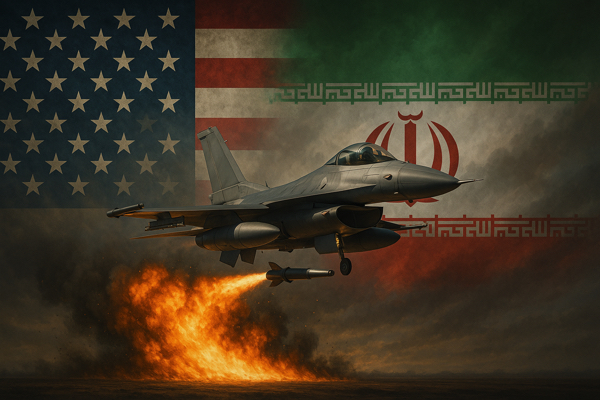
The Middle East stands at the precipice of a catastrophe unlike any seen in decades. The year is 2026, and the United States has massed an unprecedented level of firepower in the region, explicitly targeting the Islamic Republic of Iran. This mobilization, ordered by President Donald Trump, follows Iran’s brutal crackdown on anti-government protesters. With the USS Abraham Lincoln Carrier Strike Group now in striking distance, the world holds its breath, watching as the mechanisms of war shift from theoretical contingency to stark, executable readiness. The deafening silence in diplomatic channels has been replaced by the roar of jet engines and the chilling threats of commanders with their ‘fingers on the trigger.’
A Gathering Storm: Unprecedented U.S. Firepower Arrives
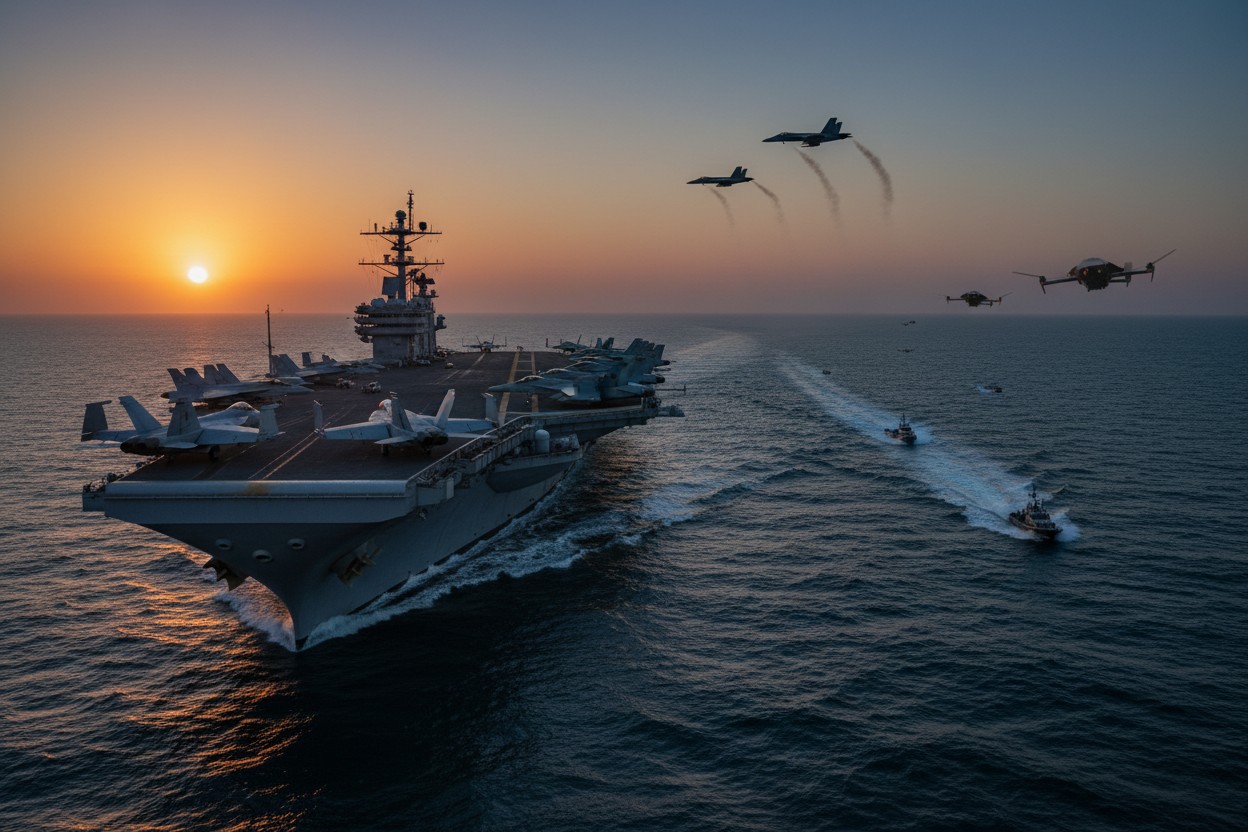
The strategic landscape of the Persian Gulf has been fundamentally altered by the arrival of the USS Abraham Lincoln and its battle group. This concentration of military force is historic. According to open-source intelligence and military analysts, the United States has gathered more firepower in the Middle East than was witnessed during Operation Desert Storm, the war in Afghanistan, or the war in Iraq. [1]
The Nimitz-class carrier itself is a floating fortress, with a max capacity of 90 aircraft, including F/A-18 Super Hornets, F-35 Lightning II stealth fighters, and EA-18G Growler radar jammers. [1] It does not sail alone. It is flanked by a ‘wolfpack’ of guided-missile destroyers—the USS Spruance, USS Frank E. Petersen Jr., and USS Michael Murphy—which are ‘fully loaded with Tomahawk cruise missiles, ready for immediate launch orders.’ [1]
This deployment is not a routine exercise. It represents a critical escalation directly linked to the political crisis in Iran. The carrier was redeployed from the Indian Ocean once protests in Iran intensified, signaling a direct response from the Trump administration. [1] Regional military analyst Talal Nahle notes that the indicators now suggest ‘planning has moved beyond contingency and into executable readiness.’ [1] The language of speculation has been replaced by ‘the language of numbers that do not lie.’ [1]
Iran’s Stark Warning: Propaganda Videos and Asymmetric Threats
Iran has responded not with diplomatic overtures but with stark, visual threats of its own. In a clear message of defiance, Iran’s state-run Islamic Ideology Dissemination Organization released a propaganda video simulating the destruction of the USS Abraham Lincoln by an Iranian Fattah ballistic missile, graphically depicting the carrier being split in two. [1]
The rhetoric from Iranian military commanders matches the belligerent imagery. General Mohammad Pakpour, commander of the Islamic Revolutionary Guard Corps (IRGC), stated publicly that Iran stands ‘more ready than ever, finger on the trigger.’ [2] An anonymous Iranian official conveyed an even more ominous warning to Reuters, stating that any U.S. attack, whether ‘limited, unlimited, surgical, kinetic, whatever they call it,’ would be treated as ‘an all-out war against us,’ and Iran would ‘respond in the hardest way possible to settle this.’ [1]
This posture reflects a long-standing Iranian doctrine. As noted in previous reporting, Iranian officials have declared a clear red line: if U.S. ordnance strikes Iranian soil, Tehran promises to retaliate against American military targets throughout the Middle East. [3] The threats are not new, but the context—with a U.S. supercarrier within range—makes them exponentially more dangerous.
The Vulnerable Leviathan: Drones, Missiles, and Swarm Tactics
Despite its immense power, the USS Abraham Lincoln represents a vulnerable, high-value target. Experts warn that Iran’s strategy is built on asymmetric warfare designed to overwhelm sophisticated American defenses with low-cost, high-volume attacks.
Cameron Chell, CEO of drone company Draganfly, highlighted the specific danger Iran’s unmanned systems pose. ‘By pairing low-cost warheads with inexpensive delivery platforms, essentially remotely piloted aircraft, Iran has developed an effective asymmetric threat against highly sophisticated military systems,’ he explained. [1] The threat is not a single drone, but saturation. Chell warned that if hundreds of drones are ‘launched in a short period of time, some are almost certain to get through,’ as modern defense systems ‘were not originally designed to counter that kind of saturation attack.’ [1]
Beyond drones, Iran possesses a formidable arsenal of ballistic and cruise missiles, which were recently showcased in drills. [1] Furthermore, Iran has initiated its ‘most visible naval mobilization in years,’ deploying a dense concentration of Islamic Revolutionary Guard Corps (IRGC) small attack vessels ‘across the Persian Gulf, the Strait of Hormuz and the Gulf of Oman.’ [1] These small, fast boats create unpredictable dangers at the world’s most critical energy chokepoint, complicating U.S. naval operations and raising the risk of a deadly miscalculation.
The Wider Theater: Hezbollah, Israel, and the Risk of Regional Conflagration
Any conflict between the U.S. and Iran would not remain a contained duel. The Middle East’s interconnected web of alliances and proxy networks guarantees immediate regional escalation. Hezbollah, Iran’s powerful Lebanese proxy, has already vowed to join any fight. Abu Hussein al?Hamidawi, chief of the Iraqi paramilitary group Kataib Hezbollah, issued a fiery warning, asserting that enemies ‘will taste the bitterest forms of death, and nothing will remain of you in our region.’ [1]
This is not abstract posturing. The Israeli Air Force recently conducted over 20 airstrikes on targets in southern Lebanon, targeting areas where Hezbollah was attempting to restore military infrastructure. [1] This action highlights the constant simmering tension on Israel’s northern border, a flashpoint that would instantly ignite in a U.S.-Iran war.
The potential for a regional inferno is widely recognized. As one analysis starkly put it, the conflict is ‘poised to explode beyond a U.S.-Iran duel, dragging in multiple state and non-state actors.’ [4] This aligns with historical patterns of conflict expansion, where local confrontations draw in global powers, as seen in the complex alliances preceding major world wars. [5]
The Point of No Return: Miscalculation and the Specter of Preemption
The most terrifying aspect of the current crisis is the high probability of miscalculation. With both sides on maximum alert and communicating through threats rather than diplomacy, the margin for error is virtually zero.
Analysts suggest Iran may be operating under a ‘use it or lose it’ doctrine. [1] Fearing a sudden U.S. ‘decapitation strike’ that could neutralize its missile forces on the ground, Iranian commanders may calculate that a preemptive strike—likely against Israel, America’s closest regional ally—is necessary to ensure their ability to retaliate. [1]
The sheer offensive power now arrayed against Iran could itself be the trigger. Nahle’s assessment highlights the presence of 1,018 Vertical Launch System cells on U.S. destroyers in the region, providing the capability to launch ‘over 1,000 cruise or air-defense missiles… in a single or closely sequenced salvo.’ [1] Faced with the prospect of such an overwhelming barrage, Iranian leadership might feel compelled to strike first in a moment of perceived inevitability.
This creates a classic ‘reciprocal fear of surprise attack’ scenario, where each side’s defensive preparations are interpreted by the other as offensive intent, creating a spiral that can lead to accidental war. The ‘deafening silence’ in diplomatic channels, paired with overt military posturing, makes this nightmare a tangible possibility. [1]
Conclusion: A Cataclysm Foretold
The pieces are now all in place. An unprecedented U.S. armada is on station. Iran has vowed total war. Proxy forces are primed for battle. The Strait of Hormuz, a artery for 20% of the world’s oil, is crowded with warships and gunboats. [6] The economic consequences of conflict here would be instant and global, threatening energy shocks that could cripple economies and spike inflation to unbearable levels. [7]
The mainstream corporate media may offer muted coverage, but the independent press and geopolitical analysts have been sounding the alarm. The path chosen by centralized state powers—escalation and brinkmanship—threatens to unleash a cataclysm that will harm ordinary people across the globe, all while the institutions that claim to protect peace prepare for war.
In such times, the principles of decentralization, self-reliance, and seeking truth beyond captured institutions become not just philosophical ideals but practical necessities. For those seeking uncensored analysis on these escalating dangers, independent platforms like Brighteon.com and BrightNews.ai offer perspectives free from the filters of corporate and state media narratives. The stakes could not be higher, and an informed populace is the first line of defense against the march to catastrophe.
References
- Iran Threatens To Sink The USS Abraham Lincoln As The Middle East Edges Closer To A Cataclysmic Showdown – End of the American Dream. January 26, 2026.
- Iran has ‘finger on trigger’ to repel US attack – general. – RT.com. January 24, 2026.
- Iran Declares Red Line: If U.S. Strikes Iranian Soil, Iran Will Strike American Targets Throughout the Middle East. – NaturalNews.com. Ethan Huff. February 4, 2024.
- Sources Say the U.S. Is Likely to Join Israel’s War Against Iran. – NaturalNews.com. Lance D Johnson. June 16, 2025.
- The Return of Eurasia Continuity and Change – Edited by Glenn Diesen and Alexander Lukin.
- Former Iranian Minister Warns of 100-Day Oil Blockade in Critical Strait of Hormuz. – NaturalNews.com. Cassie B. June 18, 2025.
- Israel-Iran War Threatens Oil Prices, with $10 per Gallon Gas Possible if War Escalates in the Persian Gulf. – NaturalNews.com. Lance D Johnson. June 17, 2025.
Submit a correction >>
Tagged Under:
current events, deception, government, lies, national security, propaganda
This article may contain statements that reflect the opinion of the author
RECENT NEWS & ARTICLES